
Part 107 for search and rescue drone volunteers
Volunteering your drone for a search is not recreational flying. The FAA's examples, Part 107 versus public aircraft operations, and flying in emergency TFRs.
Updated
Searching for a missing hiker is about as far from a hobby flight as it gets, and the FAA treats it that way. Its recreational flyers page says goodwill can be non-recreational, with the example of volunteering to use your drone to survey coastlines for a nonprofit. A volunteer search flight is therefore almost always a Part 107 operation, unless you fly as part of an agency's public aircraft program.
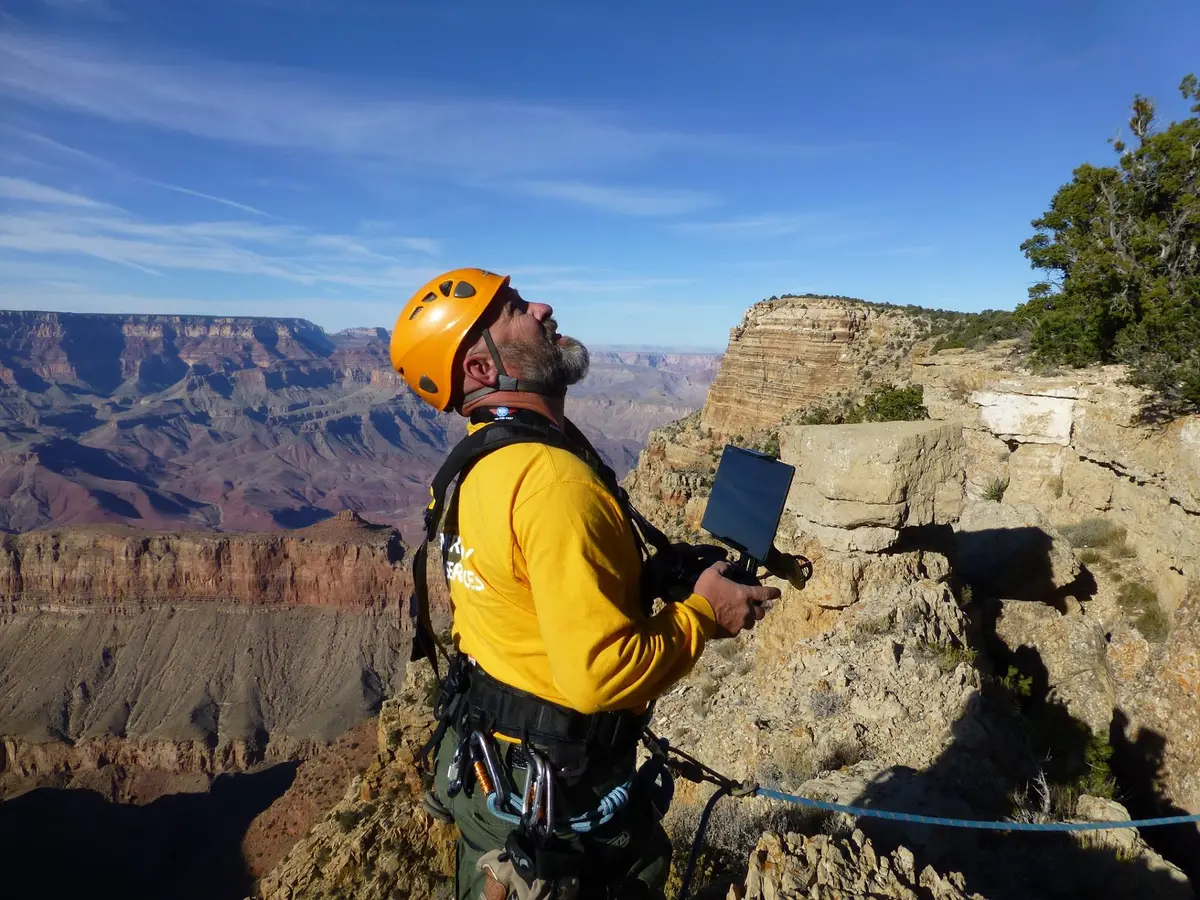 Search and rescue drone operator roped in at the rim of the Grand Canyon, looking up at the aircraftPhoto: Grand Canyon National Park, CC BY 2.0, via Wikimedia Commons
Which rules apply to a volunteer?
| How you fly | Rules | What you need |
|---|---|---|
| Independent volunteer or volunteer for a nonprofit team | Part 107 | Remote pilot certificate, registered drone, Remote ID |
| Under a government agency's program | Part 107, or the agency's public aircraft COA | Whatever the agency's program requires |
| Inside an emergency TFR | Part 107 or COA, plus approval | Coordination with the controlling agency or an SGI authorization |
The FAA's public safety page describes the two paths for agencies: fly under Part 107, or under the statutory requirements for public aircraft with a COA that lets the agency self-certify its drones and operators for governmental functions.
Can you fly at night or over the search area's crowds?
Searches often run into the evening, and staging areas draw people. Part 107 allows night flight with anti-collision lighting and a knowledge test or training completed after April 6, 2021, and the night operations post covers the details. Flight over people, including family members and media at the staging area, follows the operations over people rules.
How do TFRs work at a search?
Large searches, wildfires and disasters often come with a temporary flight restriction to protect helicopters and airplanes. The FAA says the TFR lists who may be approved, that you coordinate with the controlling agency named in it, and that the Special Governmental Interest process exists for urgent requests. Never self-launch into a TFR to help; a drone in the wrong place can ground the manned aircraft doing the search. The drone TFR post explains the process.
Join a team before the call comes. Organized search and rescue teams train with their agencies, carry the right authorizations and know how to fit into an incident command structure. A capable drone and a certificate are only the start.
What should a volunteer study?
The Part 107 test covers the skills a search uses most: airspace near the search area, weather and density altitude in mountains, night rules, and crew resource management with visual observers. Start with the free diagnostic, use the handbook for the areas you miss, and run the exam simulator until your score is stable well above 70%.
Frequently asked questions
- Do drone volunteers for search and rescue need Part 107?
- Usually, yes. The FAA's recreational flyers page lists goodwill flights, such as volunteering to survey coastlines for a nonprofit, as non-recreational. Unless you fly as part of a government agency under a public aircraft COA, a volunteer search flight is a Part 107 operation.
- Can volunteers fly inside a TFR at a search scene?
- Only with approval. The FAA says each TFR lists who may be approved, typically public safety agencies and first responders, that pilots must coordinate with the controlling agency, and that urgent requests can use the Special Governmental Interest process, which needs a current Part 107 certificate or a COA.
- What is the difference between Part 107 and a public aircraft COA?
- The FAA says government agencies, law enforcement and public safety entities can fly under Part 107 or under the statutory rules for public aircraft with a Certificate of Waiver or Authorization, which lets the agency self-certify its drones and pilots for governmental functions. Volunteers usually fly under Part 107 unless the agency brings them under its COA.